


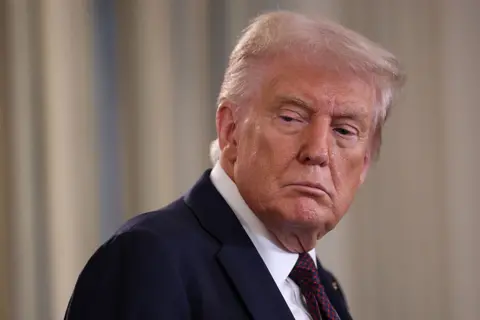
The judicial body starts its latest term starting Monday with a schedule already packed with likely significant disputes that may define the extent of executive governmental control – and the possibility of additional issues to come.
Throughout the eight months after Trump returned to the White House, he has pushed the constraints of governmental control, unilaterally enacting new policies, slashing public funds and personnel, and seeking to put formerly independent agencies further subject to his oversight.
Legal Battles Over Military Use
A recent brewing judicial dispute arises from the administration's efforts to take control of state National Guard units and dispatch them in metropolitan regions where he asserts there is social turmoil and escalating criminal activity – against the resistance of local and state officials.
Across Oregon, a judicial officer has handed down rulings preventing the administration's mobilization of troops to Portland. An appellate court is set to examine the action in the near future.
"We live in a nation of legal principles, not martial law," Judge the court official, whom the President selected to the court in his first term, wrote in her recent ruling.
"The administration have presented a variety of positions that, if accepted, risk blurring the boundary between non-military and military federal power – undermining this country."
Expedited Process Might Decide Troop Power
Once the appellate court issues its ruling, the justices could get involved via its often termed "expedited process", handing down a decision that may curtail executive ability to deploy the military on US soil – alternatively grant him a wide discretion, for now temporarily.
Such processes have turned into a more routine occurrence recently, as a majority of the Supreme Court justices, in reply to expedited appeals from the executive branch, has mostly authorized the government's measures to move forward while legal challenges play out.
"An ongoing struggle between the High Court and the lower federal courts is going to be a key factor in the next docket," Samuel Bray, a instructor at the Chicago law school, remarked at a conference in recent weeks.
Criticism About Expedited Process
Judicial dependence on the emergency process has been criticised by left-leaning academics and leaders as an inappropriate use of the court's authority. Its orders have typically been brief, providing restricted legal reasoning and providing lower-level judges with little instruction.
"The entire public should be alarmed by the High Court's increasing use on its expedited process to decide disputed and prominent matters without any form of openness – without detailed reasoning, oral arguments, or rationale," Politician Cory Booker of the state said previously.
"That further moves the judiciary's discussions and rulings beyond public oversight and protects it from accountability."
Full Proceedings Coming
In the coming months, however, the court is scheduled to address matters of governmental control – as well as additional notable disputes – head on, conducting courtroom discussions and delivering comprehensive judgments on their basis.
"The court is will not get away with one-page orders that don't explain the justification," said a professor, a scholar at the Harvard Kennedy School who studies the Supreme Court and American government. "Should they're planning to award greater authority to the executive the court is going to have to justify why."
Major Matters on the Schedule
Judicial body is presently scheduled to consider the question of federal laws that forbid the head of state from firing personnel of institutions created by lawmakers to be independent from White House oversight infringe on presidential power.
Judicial panel will also consider appeals in an expedited review of the administration's bid to dismiss a Federal Reserve governor from her role as a official on the key Federal Reserve Board – a dispute that may significantly increase the president's authority over American economic policy.
The US – plus international financial landscape – is additionally highly prominent as Supreme Court justices will have a occasion to rule whether many of the administration's unilaterally imposed tariffs on overseas products have proper regulatory backing or must be overturned.
Court members could also review the administration's efforts to solely cut government expenditure and fire lower-level government employees, along with his forceful border and deportation policies.
Even though the justices has so far not consented to review Trump's bid to end automatic citizenship for those given birth on {US soil|American territory|domestic grounds
