


Just this morning, a self-styled Alliance of the Determined, mostly composed of EU leaders, gathered in Paris with representatives of President Trump, hoping to achieve further advances on a durable settlement for the embattled nation.
With President Volodymyr Zelensky insisting that a framework to end the war with Russia is "90% of the way there", no-one in that meeting wanted to risk keeping the Washington involved.
Yet, there was an colossal unspoken issue in that grand and sparkling gathering, and the prevailing atmosphere was profoundly tense.
Bear in mind the developments of the recent days: the White House's divisive incursion in Venezuela and the President Trump's declaration following this, that "it is essential to have Greenland from the perspective of strategic interests".
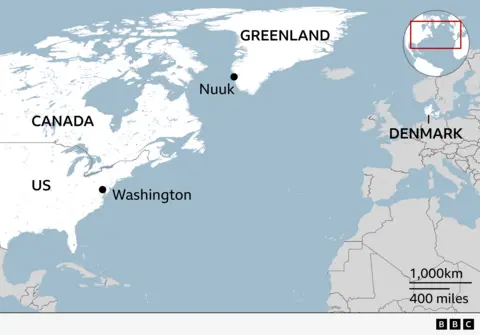
The vast Arctic territory is the world's greatest island – it's 600% the dimensions of Germany. It lies in the Arctic region but is an self-governing possession of Copenhagen.
At the conference, Mette Frederiksen, the Danish Prime Minister, was positioned across from two key figures acting for Trump: diplomat Steve Witkoff and Trump's relative Jared Kushner.
She was facing pressure from European counterparts to refrain from antagonising the US over Greenland, lest that affects US backing for the Ukrainian cause.
Europe's leaders would have much rather to keep the Arctic dispute and the debate on Ukraine distinct. But with the tensions mounting from the White House and Denmark, leaders of leading EU countries at the talks released a statement asserting: "The island is part of the alliance. Stability in the North must therefore be attained jointly, in partnership with treaty partners like the US".
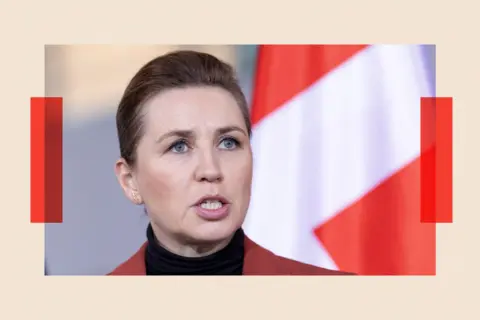
"It is for Denmark and Greenland, and them only, to rule on affairs regarding the kingdom and Greenland," the declaration further stated.
The statement was received positively by the island's leader, Jens Frederik Nielsen, but analysts say it was slow to be put together and, because of the small set of signatories to the statement, it did not manage to project a Europe aligned in purpose.
"Had there been a unified declaration from all 27 European Union countries, plus alliance partner the UK, in backing of Copenhagen's control, that would have sent a powerful signal to America," commented a European foreign policy expert.
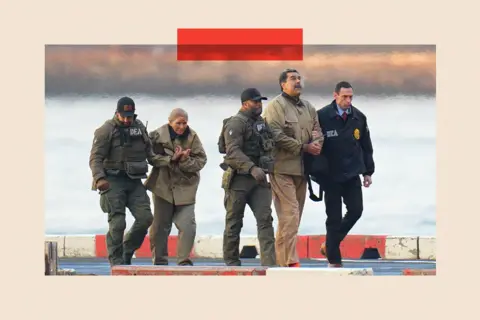
Consider the irony at work at the Paris summit. Numerous European government and other officials, including NATO and the EU, are seeking to secure the cooperation of the Trump administration in protecting the future independence of a European country (the Eastern European nation) against the hostile land claims of an outside force (Moscow), just after the US has swooped into sovereign Venezuela militarily, arresting its head of state, while also continuing to openly threatening the territorial integrity of another EU member (the Kingdom of Denmark).
To compound the situation – Copenhagen and the US are both signatories of the transatlantic alliance the North Atlantic Treaty Organization. They are, according to Danish officials, profoundly close allies. Or were.
The dilemma is, were Trump to make good on his desire to bring Greenland under US control, would it mark not just an existential threat to NATO but also a major challenge for the EU?
Europe Faces the Danger of Being Trampled Underfoot
This is far from the first instance Trump has voiced his resolve to dominate Greenland. He's proposed acquiring it in the past. He's also not excluded a military seizure.
Recently that the landmass is "crucially located right now, Greenland is covered with Russian and Chinese ships all over the place. It is imperative to have Greenland from the standpoint of national security and Copenhagen is incapable to provide security".
Denmark strongly denies that assertion. It not long ago pledged to allocate $4bn in Arctic security encompassing boats, drones and aircraft.
Under a mutual pact, the US maintains a defense installation currently on Greenland – established at the onset of the East-West standoff. It has scaled down the total of personnel there from around 10,000 during peak Cold War operations to around 200 and the US has often been faulted of neglecting Arctic Security, recently.
Copenhagen has indicated it is willing to talk about a larger US footprint on the territory and further cooperation but in light of the US President's assertion of unilateral action, Frederiksen said on Monday that Trump's ambition to control Greenland should be treated with gravity.
After the Washington's moves in Venezuela this past few days, her counterparts in Europe are taking it seriously.
"The current crisis has just highlighted – yet again – Europe's core vulnerability {

